Demon Slayer Corps Explained: Ranks, Rules and Selection
For roughly a thousand years, an unofficial army has fought a war that the rest of Japan never sees. The Demon Slayer Corps has no government recognition, no public funding and no existence on paper, yet it fields hundreds of swordsmen against Muzan Kibutsuji and his demons. Understanding how the corps is built explains why it survived a millennium of losing. This guide covers its ranks, its entrance trial and the rules that hold it together.
Who Leads the Corps?
The corps has always been led by the Ubuyashiki family, whose members are treated with near-religious devotion by the slayers. The family’s story, including why its heirs are born frail, is told in our profile of the Ubuyashiki family. Under the family, the corps is organized into squads of swordsmen, supported by trainers, messengers, medics and cleanup crews. The head of the family cannot fight himself; illness confines him to guiding the war from his estate. Yet slayers obey that soft, calm voice without question, a loyalty earned across generations of the family burying its own children in the same war. Because the government does not recognize the corps, slayers technically break the law by carrying swords in public, and they work at night, in remote places, exactly where demons hunt.
The Ten Ranks, From Lowest to Highest
Every swordsman climbs the same ladder of ten ranks, named after the traditional calendar stems:
- Mizunoto and Mizunoe
- Kanoto and Kanoe
- Tsuchinoto and Tsuchinoe
- Hinoto and Hinoe
- Kinoto and Kinoe
Members rise by surviving missions and proving themselves in battle. In Tanjiro’s year, just five candidates survived Final Selection, which is why every rank above Mizunoto commands instant respect from anyone who knows what the climb costs. Pay rises with rank as well: even the lowest rank earns a comfortable salary for the era, while those at the very top may draw whatever support they require. Above the tenth rank stands a separate class entirely, the nine Hashira, the strongest slayers alive, each a master of one Breathing Style. To be considered for a Hashira seat, a slayer must kill fifty demons or defeat a member of the Twelve Kizuki.
Final Selection: Seven Nights on Mount Fujikasane
Nobody joins by signing up. Candidates first train under a cultivator, an experienced retired slayer such as Sakonji Urokodaki, until the cultivator judges them ready. The trial itself is held on Mount Fujikasane, a mountain wrapped in wisteria that blooms there all year round. Demons cannot stand wisteria, so the mountain works as a natural prison: weak demons captured alive by the corps are held on its slopes. Candidates must survive seven nights among those demons and walk out at dawn on the eighth day. Many do not. One imprisoned demon, the Hand Demon, personally ate forty-seven candidates over the years, which shows that survival on the mountain is partly skill and partly luck. The trial’s history is explored further in our guide to the Final Selection arc.
What a New Slayer Receives
Those who survive get four things:
- A uniform woven from special fibers that resist demon claws and fangs, breathe well, and hold up in harsh weather.
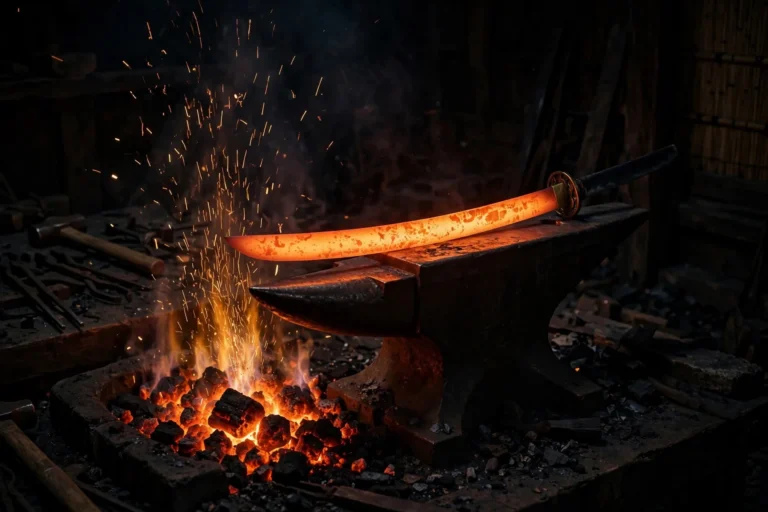
- A Nichirin sword, forged over ten to fifteen days from ore the new slayer personally selects on the mountain. The blade changes color to match its owner, as explained in our Nichirin sword guide.
- A Kasugai crow, a trained messenger bird that delivers mission orders and reports. Zenitsu famously received a sparrow instead, for reasons nobody explains.
- A rank and a mission, because demons do not wait for graduation celebrations.
From that point, assignments arrive through the crow, and slayers travel wherever the reports of missing people and strange deaths point them.
The People Behind the Swordsmen
The corps is far more than its fighters. The Kakushi, a support brigade in plain uniforms, clean battlefields, rescue survivors and carry the wounded. Medical care waits at the Butterfly Mansion, where the injured recover. Swordsmiths at the Swordsmith Village forge and repair every blade. Cultivators keep training the next generation, and a chosen apprentice called a Tsuguko trains directly under a Hashira as a designated successor, because the corps always plans for its leaders to fall.
How a Mission Reaches a Slayer
Word of a demon usually begins as a pattern: missing travelers on one road, strange deaths in one village, a town too frightened to sleep. Reports filter back to the corps, and Kasugai crows carry the order to whichever slayers are nearest, sometimes a lone Mizunoto and sometimes a Hashira with a squad. Because slayers are unofficial, they often travel quietly and strike at night; a drawn sword in daylight draws the police instead of thanks. The Hashira each watch over assigned regions and gather for Hashira meetings, where the head of the corps reviews the war and settles questions no single slayer can answer alone. It is a slow, fragile system, held together by birds, rumors and trust.
Rules Every Slayer Lives By
The corps runs on discipline. Nichirin swords exist for one purpose, killing demons, and misusing one against people is forbidden. Orders flow through the crows, and ranks are respected even between strangers meeting for the first time on a dark road. Slayers protect civilians above property, above pride, and above their own safety. It is this structure, maintained quietly by generations who never expected thanks, that Demon Slayer Manga keeps coming back to when it explains how ordinary humans held the line against a thousand years of darkness.