Swordsmith Village Explained: Where Nichirin Swords Are Made
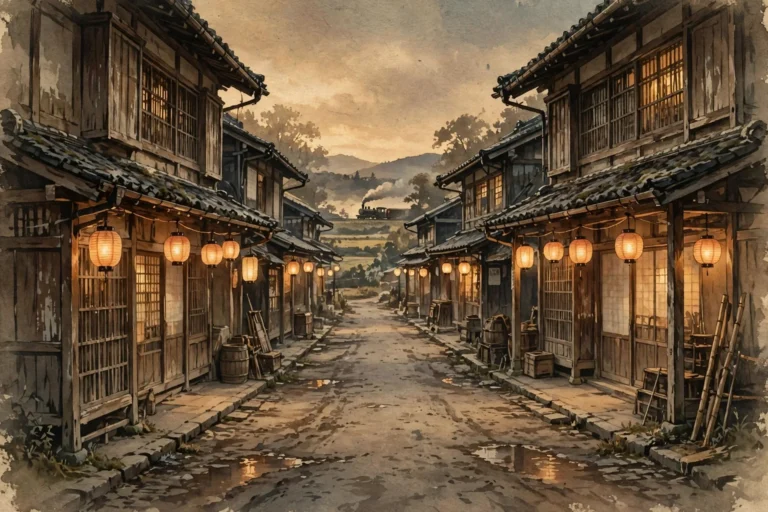
Every Nichirin blade carried by the Demon Slayer Corps comes from a single place, and that place does not officially exist. The Swordsmith Village appears on no map, its location is known to almost no one outside its own residents, and even the slayers who depend on its swords are never told where it stands. The reason is simple arithmetic: swordsmen can be trained in a few years, but master smiths take decades to replace. If the village were found and destroyed, the Corps would lose its only source of weapons. This guide explains how the village stays hidden, who lives there, how its blades are made, and what happened on the night the demons finally found it.
A Village Reached Only in Stages
Visiting slayers never learn the route. A swordsman who needs to visit, usually to collect a new blade or recover from injuries, is carried there by members of the Kakushi support corps in relay stages, with eyes covered and ears blocked, while the carriers and the route are changed again and again along the way. By the time the visitor arrives, retracing the journey is impossible. Even the Hashira, the highest-ranking fighters in the Corps, are not told where the village stands. This extreme secrecy is not tradition for its own sake. It is the protection around the Corps’ single most important military asset.
The People of the Village
The village is led by Chief Tecchin Tecchikawahara, a very small, elderly man whose word is final, and who is famous for settling even furious disputes calmly, often with sweets. Every resident wears a comical hyottoko mask, a long tradition that protects their identities if any of them is ever captured and questioned. Swordsmithing is the village’s entire purpose. Each smith is assigned to specific swordsmen and remains responsible for their blades for life, forging, repairing and re-forging them after every battle.
The most famous smith is Hotaru Haganezuka, maker of Tanjiro’s swords, a craftsman so devoted to his work that he once chased his own client with a knife after Tanjiro broke a blade he had forged. At the other end of the village’s life is Kotetsu, a young boy training to become a smith, who maintains the village’s oldest treasure and befriends Tanjiro during his stay. The village is also known among slayers for its restorative hot springs, where injured fighters recover between missions. The villagers’ loyalty runs both ways: when the attack came, elderly smiths and young apprentices alike refused to abandon their work, and several risked their lives to keep forging and delivering blades in the middle of the battle.
How a Nichirin Blade Is Made There
The smiths work with Scarlet Crimson Iron Sand and Scarlet Crimson Ore gathered from Mount Yoko, a summit exposed to sunlight throughout the year, which is why the finished metal can harm demons at all. The full forging process and the meaning of each blade color are covered in Nichirin Swords explained. A smith normally delivers the finished sword in person and watches the blade change color in its new owner’s grip, the moment that confirms the match between weapon and swordsman.
The village also guards a mechanical training doll called Yoriichi Type Zero, built by the swordsmiths’ ancestors in the Sengoku era with six arms to reproduce the movements of the strongest swordsman who ever lived. Tanjiro trained against the doll shortly before the attack and sharpened his swordsmanship against its six-bladed assault. Inside the doll’s body, unknown to almost everyone, a sword more than three hundred years old had been hidden since the age of the first Breathing styles.
The Night the Village Was Attacked
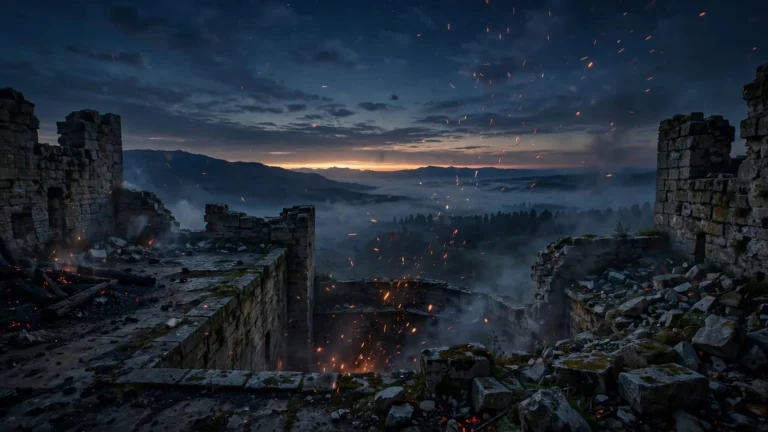
The secrecy finally failed when the Upper Rank Five, Gyokko, uncovered the village’s location. Muzan sent Gyokko and the Upper Rank Four, Hantengu, to wipe it out, calculating that a Corps without fresh blades would collapse before the final war even began. The attack fell at night, when most residents were asleep, and the smiths, who are craftsmen rather than fighters, had almost no way to defend themselves.
The Mist Hashira Muichiro Tokito and the Love Hashira Mitsuri Kanroji fought the two Upper Ranks through the night alongside Tanjiro, Nezuko and Genya, and both Hashira awakened their Demon Slayer Marks in the process, the phenomenon covered in the Demon Slayer Mark explained. The fighting split across the village. Gyokko trapped Muichiro inside a water prison and moved on to threaten the chief’s workshop, while Hantengu’s emotion clones overwhelmed Tanjiro’s group near the hot springs. Muichiro escaped only because Kotetsu forced air through a reed into the water, giving him the breath he needed for one final technique, and that rescue also returned the young Hashira’s lost memories. At the springs, Mitsuri arrived in time to hold back the hatred clone Zohakuten while Tanjiro hunted down Hantengu’s real body at dawn. Both Upper Ranks were destroyed, though the village was left badly damaged and its location had to be abandoned. The battle’s place in the wider war is set out in the story arcs in order guide.
Why the Village Matters
The Corps can replace swordsmen faster than it can replace swordsmiths, which is why Muzan treated the village’s discovery as a move that could win the war on its own. After the attack, the surviving smiths were moved and hidden again under even tighter secrecy, and their work continued without pause, because every broken blade in every battle across the country still depended on them. More place and system guides like this one are collected at Demon Slayer Manga.