The Final Selection Arc Explained: Where Every Slayer Begins
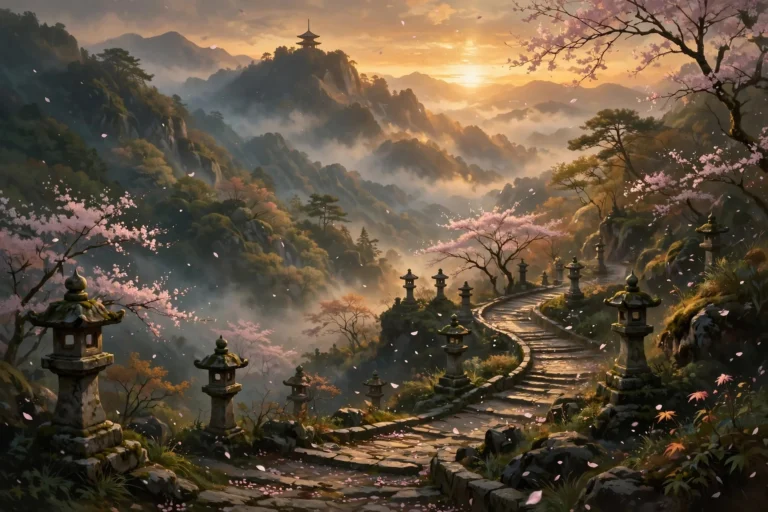
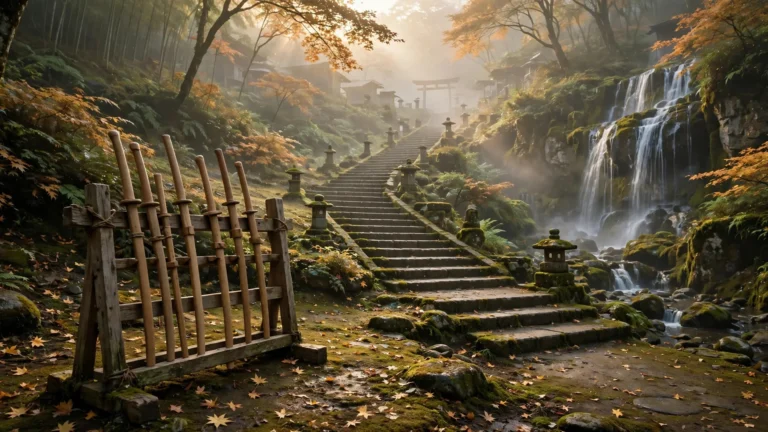
Before a Demon Slayer ever receives a uniform, a sword or a single order, there is a mountain. Mount Fujikasane looks peaceful from a distance, wrapped in wisteria blossoms that bloom all year round, but the flowers are not decoration. Wisteria is poison to demons, so the blossoms form a living fence: demons captured alive by the Corps are imprisoned on the mountain and can never climb down. Once a year, the prisoners become the exam. This is the Final Selection, the gate every slayer in the series had to pass, and the short arc that turns Tanjiro from a trained student into a working demon slayer.
The barrier has a precise shape, and the shape is the whole test. Wisteria grows thickly from the foot of Fujikasane up to about halfway, but it does not grow near the summit. The demons are trapped in the band between the flowers below and the open peak above, unable to descend through the poison blossoms and with nowhere else to go. Candidates pass through the wisteria, spend their seven nights in the demon zone at the top, and only have to live long enough to walk back down through the flowers at the end. The mountain is, in effect, a cage with a door that only humans can use.
The One Rule: Survive Seven Nights
The test has no scoring system and no rescue. Candidates climb the mountain at sunset, and anyone still alive after seven nights has passed. There is no food provided, no safe shelter and no way to call for help. The demons inside the wisteria barrier are weak ones, starved and furious after years of captivity, but for teenagers carrying borrowed swords they are more than enough. Roughly twenty candidates entered the year Tanjiro took the test. Only a handful came back down. The full structure of the exam, and how it fits into the ranks described in our guide to the Demon Slayer Corps and its rules, shows how deliberately harsh the Corps is: it would rather lose candidates on the mountain than lose trained slayers on their first real mission.
Why Tanjiro Was Ready, and Why He Nearly Was Not
Tanjiro arrived better prepared than most. His teacher, Sakonji Urokodaki, had spent two years drilling him in Water Breathing on Mount Sagiri, ending with a test of its own: splitting a massive boulder, which Tanjiro managed only after guidance from the spirits of Sabito and Makomo, two of Urokodaki’s former students. What Tanjiro did not know was why those two never came back from their own Final Selection years earlier. The answer was waiting for him on Fujikasane, and it had been eating Urokodaki’s students for decades. His breathing foundation is the starting point of the journey traced in our guide to every Breathing Style in the series.
The Hand Demon: A Grudge With a Body Count
Most demons on the mountain are ordinary. The Hand Demon is not. Urokodaki captured it during the Edo period and left it imprisoned, and over the following forty seven years it survived by eating the other prisoners and every candidate it could catch, growing into a huge, many-armed monster. It kept a specific grudge: it recognised Urokodaki’s fox masks, so it hunted his students on purpose, killing thirteen of them, including Sabito and Makomo. When it tells Tanjiro this mid-fight, the battle stops being an exam and becomes payback. Tanjiro wins by doing what none of the thirteen could: reading the opening thread with his sense of smell and cutting through the demon’s thickest point, its neck, with the Water Surface Slash. The kill also marks the first visible change in his forehead scar, a detail with a long story behind it.
Who Walked Down the Mountain
When dawn came on the seventh day, only four candidates stood at the meeting point: Tanjiro, a terrified Zenitsu who survived mostly by fighting in his sleep, the quiet Kanao who seemed untouched by the week, and the aggressive Genya, who demanded his sword on the spot. A fifth, Inosuke, had charged in before the test officially began and simply left early, which is why he was not standing with them. Their very different survival styles preview exactly what kind of fighters they become, from Zenitsu, the slayer who mastered a single form, to Genya’s unusual methods. Tanjiro’s week says plenty about him too: he spent part of it carrying an injured fellow candidate clear of the Hand Demon and still stopped to ask the monster whether a demon could ever become human again, a question that would shape every mission he took afterwards.
The Ore, the Crow and the First Order
Passing brings three things. First, each new slayer chooses a lump of raw ore from a table, the steel that will become their personal sword, delivered about fifteen days later by a swordsmith from the hidden village. Tanjiro’s smith, Hotaru Haganezuka, was openly furious when the finished blade turned black instead of the bright red he had been hoping for, a reaction that makes sense once you know what the colors mean. The choice matters more than it seems, as our guide to Nichirin swords and their blade colors explains. Second, each slayer receives a Kasugai crow for orders and communication. Third, the first mission arrives almost immediately, sending Tanjiro toward a town where girls have been vanishing at night. The Final Selection is only the second arc in the running order listed in our complete guide to the Demon Slayer story arcs, but everything later grows out of these seven nights: the survivors, the grudges and the first scars. More breakdowns like this one are collected on Demon Slayer Manga for readers working through the series arc by arc.