Demon Slayer in the Taisho Era: The Real History Behind It
Demon Slayer feels timeless, like a story that could belong to any age of old Japan. But it has a specific address in history. The series is set in the Taisho era, the short and fascinating period between 1912 and 1926, when Japan stood with one foot in its samurai past and the other in the modern world. Once you know what the Taisho era really looked like, the whole story gains a new layer.
When exactly is the Taisho era
The Taisho era began in July 1912, when Emperor Taisho took the throne, and ended in December 1926. It lasted only fourteen years, sandwiched between the long Meiji era of rapid modernization and the Showa era that followed. Those fourteen years were a burst of cultural energy: democracy movements, new art, cinema, jazz, and a generation of young people eager to mix Japanese tradition with Western ideas.
The story places Tanjiro’s journey in the early years of this era, around the late 1910s. That dating matters because it explains details that might otherwise seem odd. Our complete timeline of the series maps these events against the wider history of the Demon Slayer world.
A country caught between two worlds
Picture the Japan of this period. In the cities, people wore Western suits and dresses alongside kimono. Cafes served coffee next to tea houses. Newspapers, telephones, and electric lights were spreading, while much of the countryside still lived much as it had for centuries. Tanjiro himself is a perfect symbol of this split: a charcoal seller from a mountain village, living a life his ancestors would have recognized, while steam trains thunder through the valleys below him.
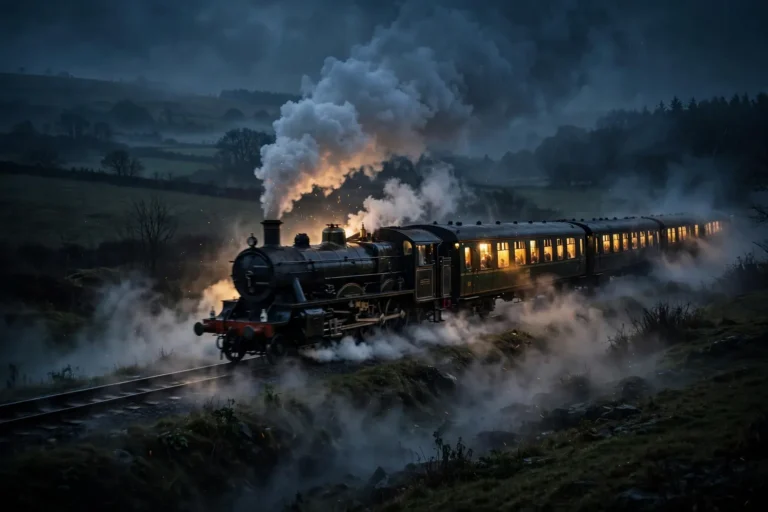
The Mugen Train is the clearest sign of the age. By the Taisho era, Japan’s railway network was mature and expanding fast, connecting remote regions to the cities. A demon haunting a steam locomotive could only exist in this exact moment of history. We break down that story in our Mugen Train arc guide.
Yoshiwara and the Entertainment District
The Entertainment District arc is rooted in a real place. Yoshiwara was Tokyo’s licensed pleasure quarter, a walled district of teahouses and theaters that had operated since the 1600s. By the Taisho era it was both glamorous and notorious, a world of strict rules and hidden suffering. The arc’s portrayal of a glittering district with a dark underside mirrors how Yoshiwara was actually seen: beautiful on the surface, brutal underneath.
Daki and Gyutaro’s story draws on the real poverty that fed places like Yoshiwara, where poor families sometimes sold children into service. The fantasy of demons is layered directly over genuine history. You can read the full story of that arc in our Entertainment District arc breakdown.
Swords in the age of guns
Here is a detail worth pausing on. By the Taisho era, the Japanese military had used firearms for decades, and carrying swords in public had been banned since the 1870s. The samurai class was long gone. Yet the Demon Slayer Corps still fights with swords, in secret, in the mountains and villages. That secrecy is not just a plot device; it fits the period perfectly.
An organization of sword fighters would have looked like a strange relic in 1915, which is exactly why the Corps hides. They cannot explain themselves to the police or the army, so they operate in the shadows, guided by their own ranks and rules and their crow messengers. The clash between their ancient methods and the modern world around them is part of what makes the story so compelling.
What the era meant for the Demon Slayer Corps
The Taisho era explains why the Corps works the way it does. In an age of newspapers, telephones, and railways, a secret army of sword fighters faced a real problem: how do you move hundreds of warriors around Japan without anyone noticing? Their answer was to stay deliberately old-fashioned. Kasugai crows carry messages instead of telegrams. Swordsmen travel on foot or by train in disguise. Safe houses look like ordinary inns. The Corps survived by becoming invisible inside a modernizing country.
This also explains the Corps’ relationship with technology. They are not ignorant of the modern world; they simply cannot use it openly. A slayer cannot file a police report about a demon, because no officer in 1915 would believe it. So the organization built a parallel system: its own ranks, its own healers at the Butterfly Mansion, its own swordsmiths in a hidden village. Our guide to the Swordsmith Village shows how one part of that hidden network operated, and our Nichirin swords explainer covers the weapons they forged in secret.
The tension runs through every arc. Demons attack trains, theaters, and city districts, the proudest symbols of the new Japan, while slayers answer with swords, the proudest symbol of the old. The Taisho era is the only period in Japanese history where that collision feels natural, and the story uses it to the fullest.
Small details the era explains
- Charcoal selling: Tanjiro’s trade was still a real livelihood in mountain villages, where city demand for fuel kept burners like his family employed.
- Wisteria: The flower that poisons demons is a real Japanese plant, long planted at shrines and associated with protection in folklore.
- Western medicine: Tamayo’s clinic in Asakusa fits an era when Western-style doctors were setting up practices in Tokyo neighborhoods.
- Newspapers and cameras: Information traveled fast enough in the Taisho era that demon rumors could spread, which is why the Corps works so hard to stay hidden.
The Taisho era lasted only fourteen years, but it gave Demon Slayer its unique texture: kimono beside suits, swords beside steam trains, ancient demons haunting a modernizing nation. For more explorations of the world behind the story, browse the guides at demonnslayermanga.com.