Kamado Family Explained: Lineage and the Hinokami Kagura
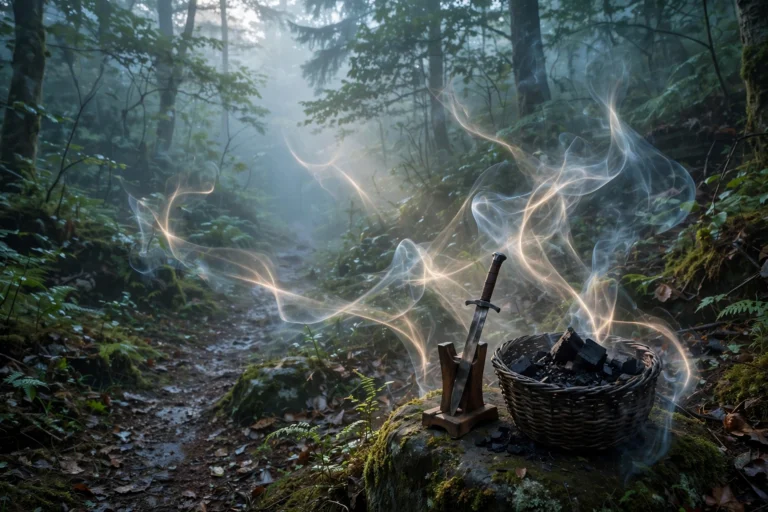
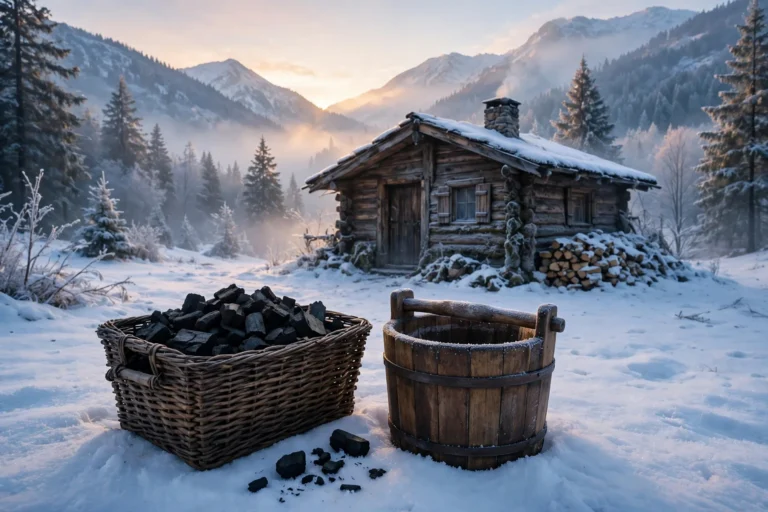
High on a quiet mountain, the Kamado family made a simple living from charcoal. The father had died young, so the eldest son walked down to the village in every season to sell what the family kiln produced, while his mother raised five younger children. They were poor, but the household was warm and close, and the boy was known in the village below for stopping to help anyone who asked. Within a single night, that family was almost completely wiped out, and its two survivors became the centre of a war that had been running for a thousand years. This is who the Kamados were, and why they mattered so much.
The Parents: Tanjuro and Kie
Tanjuro Kamado was the father, a man with a frail body and a perfectly calm temperament. Despite his poor health, every New Year he performed the Hinokami Kagura, a demanding ritual dance that lasted from sunset to sunrise in the snow, without his breathing ever becoming strained. He told Tanjiro that the secret was correct breathing: a person who breathes properly can work, dance or fight without tiring. His wife Kie raised their six children, Tanjiro, Nezuko, Takeo, Hanako, Shigeru and the youngest, Rokuta. After Tanjuro died of illness, Kie kept the family fed and together through charcoal sales and sheer steadiness.
Two things defined the family’s inheritance: a pair of hanafuda earrings and a forehead scar, passed from father to son for generations, and the dance itself. None of the Kamados knew it, but both the earrings and the dance connected directly to the most feared swordsman in history, a link explored in Tanjiro’s scar and hanafuda earrings explained.
Everyday Life on the Mountain
The family’s work was slow and physical. Wood was burned gradually in a kiln until it became charcoal, which Tanjiro carried down the mountain in a heavy basket and sold door to door. The villagers trusted his nose so completely that they once asked him to settle an argument about a broken dish, and he identified the culprit, a cat, by scent alone. On the day everything changed, an old man named Saburo insisted Tanjiro stay the night with him rather than walk back in the dark, warning that demons come out after sunset. That kindness saved Tanjiro’s life and cost him everything else.
The Hinokami Kagura: A Dance That Hid a Sword Style
Once a year, the Kamado men performed the Hinokami Kagura to pray to the Fire God for protection. The ceremony was built from twelve distinct movements, repeated in a circle from evening until morning, and it demanded total control of breathing from start to finish. What the family never knew was that these movements were not created as a dance at all. Centuries earlier, their ancestor Sumiyoshi had watched Yoriichi Tsugikuni perform Sun Breathing and memorized every form. To keep the technique alive without drawing Muzan’s attention, the family preserved it disguised as a ritual. When Tanjiro finally used those same movements in battle, the effect was immediate, as the guide to how Tanjiro moved from Water Breathing to Hinokami Kagura explains.
The Night the Family Was Lost
Tanjiro returned the next morning to find his mother and four of his siblings killed and Nezuko barely alive. She had been turned into a demon, and as he carried her down the mountain she attacked him, then stopped herself, crying, and shielded him from the swordsman Giyu Tomioka instead of feeding. Tanjiro also memorized a scent at the scene, and months later he recognized that same scent in a crowded city street: it belonged to Muzan Kibutsuji, who had come to the mountain personally. Why this ordinary family drew the demon king’s attention is traced in Muzan Kibutsuji explained.
Traits the Kamado Children Carried
The Kamados passed down more than a dance. Tanjiro inherited an unusually hard forehead, a scar that later changed shape as his Mark awakened, and a sense of smell sharp enough to detect lies, emotions and the exact moment an enemy’s guard opens. Nezuko proved to be just as unusual among demons. She recovered her strength by sleeping instead of eating people, her blood developed the rare property of burning demon flesh while leaving humans unharmed, and she eventually became the first demon in history to survive direct sunlight, which is covered fully in Nezuko Kamado explained.
Why Muzan Feared This Family
From Muzan’s perspective, the Kamados were a problem he believed he had solved centuries earlier. The hanafuda earrings alone were enough to trigger his memory of Yoriichi, the only man who ever nearly killed him, and the family’s survival meant Sun Breathing had survived with them. The danger doubled when Nezuko conquered the sun, because she offered Muzan the daylight immunity he had chased for a thousand years. The swordsman behind all of this fear is profiled in Yoriichi Tsugikuni explained.
What Became of the Kamados
After the final battle, Tanjiro and Nezuko were the family’s only survivors. They returned to the mountain where their relatives were buried, and their friends from the Corps came to visit them there. The story’s last chapter moves to the modern day and introduces descendants including Sumihiko Kamado, a schoolboy in present-day Tokyo who shares Tanjiro’s face and gentle nature. The family’s line, nearly erased in one night, quietly outlived the demon who tried to end it. More family and character guides are gathered at Demon Slayer Manga.